
Some of them never knew their parents Guest: Margo Harkin


Last December, I was on the London Underground when an ad from the Government of Ireland caught my attention: “The Mother and Baby Institutions Payment Scheme is open for applications.”I assumed it was something like a truth-and-reconciliation effort, reaching out to people abroad who had been harmed in the past. But when I began looking into what these institutions actually were—places where unmarried pregnant women were sent to give birth—I realised the story was far darker and far more complex.
Curious, I asked Irish friends, watched Small Things Like These, and then discovered the documentary Stolen. Its director, Margo Harkin, kindly agreed to speak with me—even before I managed to watch the full film, which is available on Amazon Prime (though you may have to dig a bit to find it).
In this episode, I ask Margo why she chose to make a film about the mother-and-baby homes; what she learned from survivors; how the experience shaped the lives of the children born there; and how victims view the government’s compensation scheme. Ultimately, our conversation reveals a deeper tension between modern Ireland and the remnants of an older, entrenched social order.
Hello and welcome back to another episode of We Can Find a Way. My name is Idil Elveris. This podcast is about conflict and alternative resolution methods to resolve conflict. I try to cover all sorts of conflict in this podcast for practitioners and people interested in dispute resolution with examples from all over the world.
We Can Find a Way is sponsored by Dr. Paolo Michele Patocchi, Attorney at Law and Arbitrator. I'm grateful for his engagement with alternative dispute resolution in Turkey by participating in multiple conferences as a speaker, teaching at Bilkent University in Ankara, and now supporting my podcast, We Can Find a Way.
In this episode I'm covering a subject that caught my attention a year ago. I was sitting in the Underground in London just about this time in December and spotted an ad by the government of Ireland that said the Mother and Baby Institutions Payment Scheme is open for applications for anyone who spent time there. I thought this was something like the 9/11 Commission in the US and was impressed that the Irish government was trying to reach out to victims that could have been living outside of Ireland to compensate a wrong of the past.
When I found out about what mother and baby institutions were, I got even more interested. These were institutions that pregnant women out of wedlock were sent to, to give birth. I talked around, asked some Irish friends about this Commission and institutions themselves. I could not get very far. Then I watched the movie Small Things Like These and understood that there were also other institutions in Ireland that served a similar function, again for women. Finally, I discovered that there was a documentary about these institutions called, to my surprise, Stolen. I watched its trailer and decided to reach out to its director, Margo Harkin. She replied positively to my email. I must confess that I talked to her before watching the documentary. It can be found in Amazon Prime with a little bit difficulty because there are films by that name, so search further. It's a pretty amazing story and not at all what I thought of when I first spotted the ad in the Underground.
Against this background, in this episode, I asked Margo why she decided to direct a movie about the mother and baby institutions; what kind of stories she heard from the persons she talked to; how the lives of children who were born there were affected by that; and finally what the victims thought of the government's compensation scheme. In the end, all of this turned out to be a conflict about modern Ireland fighting with the established order of the old. I will give Margo's bio at the end of this episode. But now let's start with the interview that took place on the 3rd of December, 2025.
Again, Margo, thanks for being with me. Please tell us about your film Stolen and how you decided to direct this movie.
MH: It was in the news for some years that Catherine Corless had discovered the death register of 796 babies had died, had come out of the Tuam mother and baby institution. How I became aware of this story was that Catherine Corless, who lives just outside the city of town of Tuam in Donegal in the west of Ireland, and she was the wife of basically a man who sold farming products. They had quite a few children and they'd all grown up and she now had grandchildren. She decided she wanted to do something with her time. She was a smart woman and she joined the local historical society. She just had a great love of history. And she herself had gone to the local school at Tuam and was aware of the Tuam mother and baby home, and even had gone to school with some of the pupils who'd been in this home. And she said they were treated very differently. They would always come in after everybody else. That was the rule. They joined the class maybe 10 minutes after everybody else, and they left the classroom before everybody else. And they were not encouraged to integrate with them.
But that wasn't her particular interest. I think she just was interested in what the history of the home was, because it was a big building and it has since been knocked down. And she just thought she'd like to look into the history of it. And she was actually more interested at first in maybe the mothers who had been at the home and went looking for death certificates. She just got closed doors everywhere. She went with the Galway County Council, with the former residents of the home itself. There were nuns who still ran a hospital in Tuam. They were nursing nuns. This is a nursing order originally from France. Nobody would give her information. So then she remembered that at some point, the Irish government had allowed the public to have access to the registry of deaths. There's a registry of birth deaths and marriages in every parish and they allowed the deaths to become accessible to the public. So, she went along there and asked if she could have the names of people who had died at the home and this included babies. The young woman who was dealing with her knew nothing about any of this. And she came back at one point and said: “Are you sure? Are you sure you want all of them?” Catherine said: “yes, I do”. And she was have to pay for each one, each death certificate that she got, but there were so many.
It was 796 babies had died at this institution which was a staggering number of babies. I think the home opened around 1926. It closed in, I would say, the early 70s. When she got these names back, she was just shocked, I think. She thought, “Well, where are they buried?” There were no records of burial anywhere. By law, you're required to list where children are buried. I think there might have been some kind of laxity in terms of the Tuam home, because it all depended who owned it. You know, in some cases, religious orders owned the building and in other cases, they rented the building. In this case, they rented the building from… It was given to them on a lease from Galway County Council who did give them some money to run it, but not enough. And it was a big, cold building. It had been a workhouse before that, you know, so it was a very, very dark, gloomy, impoverished building and freezing cold.
She began to look around and inquire. She even contacted the Bishop. Nobody had any information to give her. Gradually, she fed this information out. There's a group of people formed around her and she was very good at tracing people's backgrounds. A lot of people didn't know who they were. They didn't know. There were survivors of the home who actually were really keen to know who their parents were. There were people who had family members die in the home. People like Anna Corrigan, who discovered she had two brothers who died in the home. There's only a record of one, having actually died and no record, a death record at all of the other.
IE: What is the age of these babies dying? Because when you're saying babies thinking, like, until one year.
MH: Yeah, no, some of them were older. You could be kept at the home up until the age of five or six, and then you were farmed out into basically fostering situations with local farmers who used the children as cheap labor, effectively barely paid them any money. And they were generally very, very unhappy circumstances because they were treated very brutally and beaten a lot and not treated the same as other family members. But the babies would have died anything from a day old to, you know, weeks old to, I think, in some cases they're four or five years old, very malnourished in a lot of cases.
I was interested in this case and we'd been reading about it in the papers. There were these big headlines. 796 babies had died and there was no trace of them. The story had come out about how a local woman, what we call a traveler woman from a Romani community. It was a housing estate built on the actual home on a playground. And she lived in the housing estate. And one day in the 70s, when the housing estate was being built, a neighbor came to her and told her that there were kids running around with infant skulls on sticks. She went to investigate this and was very cross with the local boys for being so irreverent. And there was a belief at that time that maybe some of the ground had been used for the burial of famine victims, because famine victims died all over Ireland. It was kind of a scare on the national consciousness. And so, when you find little children, you often thought that was what they were.
She went to find out where they had found this skull. And on the way there, she fell down a hole. Well, she had two friends with her and they tried to pull her around. She says, “no, no, wait.” Because she saw something strange there, underground. The way she described it, she said she didn't know what she was looking at, but she saw these rows, what looked like rows of shells and there were little bundles wrapped in swaddling. And it got all dark and discolored, she says, like rows of cabbages, the other expression she used. She didn't know what they were. But they hauled her back up. They said to her: “what did you see down there?” And she says: “I don't know”. But later on, she realized what it was. So she was like a firsthand witness of what had happened there. The local clergy and the local police were involved. They basically sealed the place up and they built a little shrine to the Virgin Mary in memory of all the dead babies. And they were encouraged to believe that there were famine victims.They weren't sure.
IE: Without any forensic investigation?
MH: No, there was no forensic investigation, as far as I know at that time. And I think the bishop came along, or a priest anyway, came along and they had a service that was supposed to just put the whole thing to rest. Then Catherine came along. Nobody bargained on Catherine Corless, setting out in her journey of investigation. She started to write about it. And she was attacked from all quarters by many people at the time. There was a very strong Christian right wing Evangelist group in America who attacked her. And some local people also attacked her. And some of them were affiliated with this group. So, some of the stories went out very sensationalist type of headaches, saying “796 babies found in septic tanks”. They weren't in septic tanks in the way that we understand a septic tank has been a big tank, tank full of liquid. It wasn't like that. It was like an old Victorian style underground sewage works.
I have seen plans of how these might typically have looked and there's some doubt about whether it was actually used as the sewage works. But it certainly had storage chambers in it. The babies appear to have been stored there. The woman who fell down the hole, her name is Mary Moriarty and she knew a local woman called Rabbit, I think, who had worked in the home. This woman claimed: “yes, that's where they used to bury the babies”. And she claimed that there was actually a tunnel that went from the home itself to this burial chamber underground. That has not been proven, but there have been found in recent times evidence of underground tunnels. So that all has to come out in the wash, really.
So, anyway, I've been hearing about these stories. Everybody was seeing the headlines and I was immediately interested in it, was pretty shocking story. I just paid attention and always read all the articles and stuff about it. And then in 2017, Katherine Zappone was the minister at the time and responsible for Children and Youth Affairs. And she announced in the Doyle, which is the Irish government, that credible evidence of human remains had been found at the home. And I immediately thought, wow, Catherine Corless has been proved correct. Like everything she was saying was true, what her suspicions were, because she didn't know where the babies were, but she began to suspect that they were buried underground, after she'd made contact with Moriarty and found other stories. And we actually have a little interview in the film with Katherine Zappone coming to the site to meet Catherine Corless. And Catherine showed her a map of where she thinks babies might be buried. She came because at that point they had decided to have a Commission of inquiry into what happened at Tuam. I mean, the government wasn't going to do it really, because many people had tried to bring the story up with them. But whenever government ministers went abroad, especially the Taoiseach, the Prime Minister of the country, went abroad, it was complete overtaken by inquiries about what had happened at Tuam. Because this scandal went around the world, you know, so many babies. And later on, I discovered that babies were dying in these homes. And there wasn't just one, there were many, many of these types of homes. And there were others which had even higher death rates than the Tuam. This wasn't just a singular event. Babies were dying in large numbers and are young infants. And in some cases, there were no burial records whatsoever. Where did they all go? Nobody knows where the babies were buried at Sean Ross Abbey.
IE: I guess there were some adoptions.
MH: Yeah. One of my interviewees is a woman called Colleen Anderson, who was born in Sean Ross Abbey. The head nun there sent her off to her niece in Chicago, her married niece, who already had one child but wanted another one. This is very unusual that a nun would send a baby off to a relative of hers. I mean, the legality of a lot of these transfers of children, like basically human trafficking, is very, very suspect.
She was only in Sean Ross for a very short time and has come back to Ireland. So the reason I wanted to make a story, it was on the 17th of March 2017 that I went to see Catherine Corless and said I would be interested to make a feature documentary. But Catherine didn't really understand what a feature documentary was. She was so used to being besieged by news people that she thought I would do a couple of interviews and it would be all over. But I just decided I wanted to open it out and do a broader thing rather than just about Tuam because it was such a big story in terms of, you know, so many institutions were involved in this kind of treatment of children and women. Basically, the women were shamed and put into these homes. And it's just a huge indictment of how women were treated in Ireland in the 20th century. And it even went in up until 1998, in fact.
There was a home not far from me in a place called Newtown Cunningham in County Donegal, where women were still going to have their babies outside of wedlock. And they were secret places, you know, and was a shameful thing that happened. To think that in this day and age that was still going on, you know, in 1998. It was a very complex subject, and at times, I felt I was drowning in the information that was being uncovered. Tuam was one story. Like, I tried to find a representative sample of people who had different experiences.
IE: Did you do this with the statistical methods after getting all the data or something?
MH: No, no. I'm not a scientist, I'm not a lawyer.
IE: You're an artist.
MH: I'm an artist, yes. But at the same time, I tried to apply some rigor. So when I researched the cases, we interviewed a lot of people without interviewing them, just to try and assess if they were suitable or not. And for example, you could divide participants into people who had given birth in the home themselves who still survived. You could divide it into people who had been born in the home and had survived. And there were people who were born in the homes and had not survived. Because a lot of the women who were sent to mother and baby homes, and they were often sent even by their parents. And generally local clergy were involved, like priests would have been involved in sometimes driving people to these places. There's several stories like that. So the church had a big involvement in it. And the whole climate in Ireland, which was ruled by the church at the time, was absolutely important and how this all transpired. And they tried to remove any blame from themselves, but they're held to account by some of the people who were interviewed in the film for their involvement and how they made people feel. You know, people were frightened of the clergy in Ireland at that time.
Anyway, I went to see Catherine. She agreed to be involved. Her life was assailed from the point that she started to write about, you know, what she discovered. And also apart from that, she was very good at tracing the lost parents of children who were now adults who came here and wanted help, you know, because that's a bewildering process for many people. But she was good at doing it and she worked out how to do it, you know. So, she helped a lot of people in that way. So I did look for a group of people and like, for example, I had several people who were mothers who'd given birth in the home, and two of them had reunited with their children as adults 40 years later. I spoke to people who were born in the mother and baby homes. I spoke to a man who had been fostered out after being born in a mother and baby home, had been searching for his mother and finally found his mother very sadly, about maybe eight months before she died tragically of cancer. That it was just in time and he's quite damaged. I mean, all these people have been put through undue suffering trying to work out who they were.
Like, he joined the army at one point. His name is Michael O'Flaherty, and he knew nothing about his parents. But the army was able to tell him that he was adopted. And they were able to find out whose parents were, but couldn't tell him. So cruel, the fact that people were disallowed access to information about their lives. I interviewed a woman called Anna Corrigan, who is another category. Again, she had two brothers who died in the Tuam mother and baby home. So she herself had not been in any home. She was actually born into a happy marriage between her father and her mother. And she discovered her mother had been in twice and given birth to Tuam. And her father had also been in an industrial school along with his brother and sister. And his sister died at the age of 13 in an industrial school, which was another way of kind of basically imprisoning children of the state who were deemed not good enough really, for one reason or another, because they were either born out of wedlock or their father had died or there was alcohol in the family or something like that. And they were just taken away, supposedly to be given the chance to lead a better life. But in many cases, they didn't. They were treated very cruelly. Anna Corrigan, she has declared the Tuam site a crime site because her two brothers disappeared. There's no record of one of them having died. So, she suspects that he could be walking around America, for example. That's where a lot of children were sent to and not even know who he is. You just see the suffering and it's a dreadful ache, you know, to know that you have two brothers that you didn't know about. You discovered after her mother died that this was the case. Her life is just completely consumed by it, trying to find out what happened to her brothers. And one of her brothers, there was a record of him on one of the medical reports, one of the medical inspections of the home. And he's described as being an emaciated, ravenous child they believed was mentally defective. It's horrible.
IE: How are you affected by all of this, Margo?
MH: People always ask that. They always think I suffer. I never suffered.
IE: I mean, maybe a secondary trauma.
MH: No, I empathize fully, obviously, and it makes me very sad that we behave like this. But in fact, my spirit would be a fighting spirit, that these people have a right to be heard and fought to have that funded. It took me a year to raise the funding. And then Covid happened and, you know, nearly all collapsed. And then I joined partnership with a another company in Dublin because I had moved out of my city center office and I was working from a tiny office like this one here that you can see full of.. such a mess. And they took over all the production side of things, signing the contracts. And I had raised most of the money, but it all had to be contractually signed off-on and a few more bids for you. I take it as people always forget. They think you can just step and you have to raise the money. It costs a lot. You know, I spent six years working on this film and maybe a year and a half or two years, you know, given that we had Covid at the start of it to try and get the money together. You know, founders are very exacting these days. They want a lot of information. They want a lot of records. You know, there's a whole process that goes on behind the scenes that nobody ever sees.
The producer and I, we went and identified a lot of people, and I worked a lot as well with a woman called Caelainn Hogan. It's a strange Irish name. And she'd written a book called Republic of Shame, which is worth reading. I was able to use Caelainn's information, and we had meetings where we discussed, you know, the type of people we would try and having the phone. And I was able to use a lot of her research and contacts to try and get people. Like one of the people I couldn't get was the religious orders. They wouldn't talk to me at all. It was all looking so bad for them that they just decided to withdraw from any public discourse on it. But we certainly tried.
But she did put me in contact with quite a lot of people. And then it's just word of mouth when you talk to one person and they'll say another person try this person. And so we kind of balanced out a picture of who we would talk to. One of the women we spoke to near the end is a woman called Joanne Neary, who was born in a mother baby home in Dublin on the Nearest Road, St Patrick's. Her mother gave birth in there. It was in more recent times, and she was very unusually allowed by the family who fostered the child to bring her home at the weekend. And one weekend she just decided she wasn't going to hand her back. And the social worker came and says: “no, you have to hand her back”. And the mother told her very impolite words, basically to F off, and she wasn't handing her back. So that was kind of the start of the end of the whole thing.
There were different reasons why it ended. Ireland became much more liberal. The Irish government also had introduced financial allowance for unmarried mothers. So it was a payment that was made to single women, and that made a difference. It wasn't much, but it was enough. People could go to England for abortions because the Abortion Act had come in in Britain. And, you know, we know there are records of at least 5,000 a year having gone to England for abortions, and it wasn't allowed in Ireland, but actually the state was perfectly happy for people to go abroad for abortions. So there were a number of factors that changed everything. I mean, and a big factor, I think, in recent years is the fact that Irish people became much more liberal and much less enslaved to the church and more likely to stand up to the Church's teaching. It's lost its influence in the way that it used to have. A large part of this was due to the number of dreadful scandals concerning the Church, of sexual abuse, which were horrific. Many, many cases of that happened. You know, it took a long time. People were put in these homes from the 20s and they went on right up to 1998, you know, spell of over 70 years.
IE: This compensation scheme was not very well received. Can you tell me a little bit more?
MH: Yeah. Just bear in mind, I'm not a lawyer. But I think the more important thing to say first is that when the Irish government finally announced an inquiry, people were very, very hopeful. They thought, finally, you know, the truth's going to come out. We will be recognized for basically what happened, our suffering will be acknowledged. We'll have a level of understanding about, you know, the shame that was wrongfully imposed on women. That only happened to a fairly minor extent because there was huge criticism of the actual report itself when it came out. It was divided into two sections, there were two committees. And if they went to one committee, their evidence would be treated as “anecdotal” and would not be subject to the kind of, of legal interrogation that it might have had if it had been a court proceedings. And other people were sent to what was called the Investigative Committee and they were subject to kind of interrogation. But very few people went to that because they didn't understand it. They all had been kind of led to believe that their stories would be believed. And this was not the case, as it turned out, because when the inquiry concluded that there wasn't really a huge problem in terms of the way the nuns or the state had behaved. They said, for example, there's very little evidence of violence committed against women. And that's contradicted by a lot of the stories that were given to the, I think it was called the General Committee, which was considered more anecdotal. And they put the blame on the parents of the family, not the church.
And also, it's very important to know that the government gave an advanced copy of the report to the Catholic Church before it was released to the families, which is outrageous really. And why did they do that? Because they cravenly were scared of the legal power of the Catholic Church. I mean, it just showed they’re still… their own mentality was back in the last century that they were afraid that they were going to be sued. They were over cautious and they basically gave them the upper hand. And people were furious about this, especially that they or their families were being blamed for what happened. So there was an uproar about this. And they also tried to bury the records. They tried to have them sealed up for over 50 years, I think, and there was a campaign to have that overruled. The records should be available to the public now. Basically, the inquiry was deemed very unsatisfactory and not a proper inquiry.
And meanwhile, there's been an effort to set up one in the north of Ireland because mothers were put into homes in the north of Ireland in the same way. There's going to be a separate inquiry there and all the same questions have been raised. Yeah, there's hope that it might be addressed better but I think the experience that we've all seen is that once the civil servants get their hands on it, it becomes an economic decision. So it was agreed that there would be compensation paid under the redress scheme to people who had, you know, either been survivors or had been in one of these institutions. But they came up with this arbitrary decision that as a child you had have been in the home a minimum, I should say, of six months before you could be eligible for the scheme. I mean, it's ridiculous, doesn't make sense. Why six months? Lots of people left the home after, you know, they were weeks old. They were sent away for adoption and we don't even know the full scope of that story.
The main thing that survivors and campaigners for the families will say is that it doesn't address the central wound of a child and a mother being separated at birth or soon after birth. Some of them never got to know their parents, ever. In a few lucky cases, they did. In some cases, the children never wanted to know their parents again because their minds have been so poisoned against them, they were told lies about them. So that central wound of being separated is not compensated for. The compensation isn't that great in any case.
IE: I see a bright side here because their story has been told by you and by the person who dig this, and they're all women and also the whole world knows about it and the public is firmly behind it.
MH: Well, I got a lot of hate mail, may I tell you? I mean, I got amazing reaction when the film went out. It went out on RTE after me you know, being… It was in the cinemas and did festivals for, you know, over a year. And then eventually it went on RTE and there was overwhelming reaction. It trended on Facebook and on Irish Twitter and everybody was talking about it and people wrote to me, thanking me and telling me their own stories, you know, proving to me that it was a huge issue, and one that people really wanted to be told. And then after about a month, negative criticism came in from people who said, I was lambasting the Catholic Church and I hated Catholics and all this stuff was all nonsense. Me and I my family are largely Catholic. My mother, she just died in February, but she was Catholic.
IE: My condolences.
MH: I'm an atheist myself, I don't hate Catholics. That's just nonsense. These people were just so angry with me and I had to came up with all sorts of reasons why the program was biased. I mean, it's all factual. And I would have to just very calmly and blatantly answer these criticisms which usually came through the RTE. They would ask me, they would send me the message and I would answer. So it had a mixed response, but overall, usually positive response.
IE: Congratulations.
MH: Thank you. But there's another documentary called Testimony, which I'm dying to see, which has just come out and that again, has a lot of witness statements and that comes out from a team in Galway. And I think a lot of the human rights lawyers at the university might be involved in that. At the minute, there are 556 survivors who are going to take a landmark case to the High Court over being excluded from the redress scheme. The levels of compensation that people get is very variable. If you accept a redress payment, you have to sign an agreement saying you will never come back again to look for more money. So a lot of people are very unhappy about it for various reasons. I think there's a general payment made to everybody who's been in a home of £5,000.
But after that, then, you know, if you're a survivor and you've been there for longer than six months, either as a mother or a child, you can apply for different levels of compensation. They put the figures in Dollars on the Internet, from $80,000 downwards, which is about €68,000. But I think very few people have got that. And also the fund has been very underused because people are not very happy with it. There's lots of questions about what they have to do to get the money. You know, I think it was an 8 million fund and people think the compensation is very, very little, really. So a lot of people have to go on for it because we're talking about a lot of people.
IE: For a small country like Ireland, I guess.
MH: Because a lot of them went to England, you see? A lot of people are applying for compensation.
IE: Hence the London Underground thing. Yeah.
MH: Absolutely. That explains why. And the London Irish Centre has very good information about redress scheme and what people might do if they wanted to look into that. And there's a project called the Clann Project, which is a site at the University of Galway, which also posts updated information and people write to them, you know, looking for help on what to do if they want to move forward with the claim.
IE: What do you think these people needed to feel whole after all this?
MH: First of all, they wanted their story acknowledged and it was publicly acknowledged in the report. It wasn't included in the majority of cases, it was not included in the findings. They weren't believed. It's effectively what they were saying. Since they didn't include them in their summary of what their conclusions were, there were not really legally valid. They would have liked an apology. They did get an apology, but from Micheal Martin, the Prime Minister of the day. I think the main hurt is the fact that the redress scheme leaves so many of them out. Nothing seems to be able to change that, like no matter how you try.
Although I do know that in 2006 the scheme was up for review and has been brought to the attention of the European Parliament. There are quite a few people campaigning for that and so that'll be very interesting to watch. But meanwhile, the Tuam forensic investigation is going on. You know, they've excavated the ground and their process of doing that, they took a long time to prepare for it. And there is a hope that some DNA evidence may link some people are still alive to the babies that have died at the home itself. But they've said that this is going to be very difficult to do. But nevertheless, they are doing that investigation. But, for example, they've ruled out that the DNA of cousins could be used in terms of connecting the children who died at the home with people alive today. Anybody who does ancestry.com or any of these, you know, research sites, ancestry sites, knows that usually what comes up as cousins. It's such a long time ago how many immediate family are still alive? So cousins is probably one of the obvious ways you could connect people.
I don't think they're making it very easy for people really, you know. I think to be made whole, that suffering needs to be public knowledge. They want a complete right to access to all their own evidential material about themselves, which despite government intervention, it had to be argued for. So even though the government had supposedly changed the legislation to make that possible, there was still lots of evidence that individual people were being refused information. And hopefully that has ended now. Hopefully some of the clergy, some of the nuns who still refused to give out information and said to individual people that they were not entitled to information. They treated these people, children and mothers, as if they were subhuman because they had sinned. You know, outside of the church. I think they should have campaigned more for the church to have properly compensated people for what they did.
We all know if you travel anywhere through Ireland, it's just teeming with institutions belong to the Catholic Church. Membership of the Catholic Church or attendance of the Catholic Church has dropped significantly. Still quite strong, but it's a dwindling force in Ireland. And they've all these buildings and they should sell them and they should give the money to the people that they victimized in their lives. Take responsibility. A lot of them will not even take responsibility. They say, “oh, this is what we were asked to do. The families asked us to do as the council asked us to do. The government asked us to do it”. It's true that they didn't to an extent, but it was done within this climate of the church having this central control of lives in Ireland. People were afraid. They went to the church because they didn't know what else to do. The church to try and disappear away their shame. And that was very, very common and very embedded and very widespread. I don't think people will ever totally recover, to be honest. You know, it doesn't just affect the people that happened to, it affects the generations after as well. So.
IE: So it's a huge trauma that continues, basically.
MH: Yeah, exactly. It does, yeah.
IE: Thank you so much. Is there anything you would like to add?
MH: That's lovely to talk to you.
IE: You too. Thank you so much.
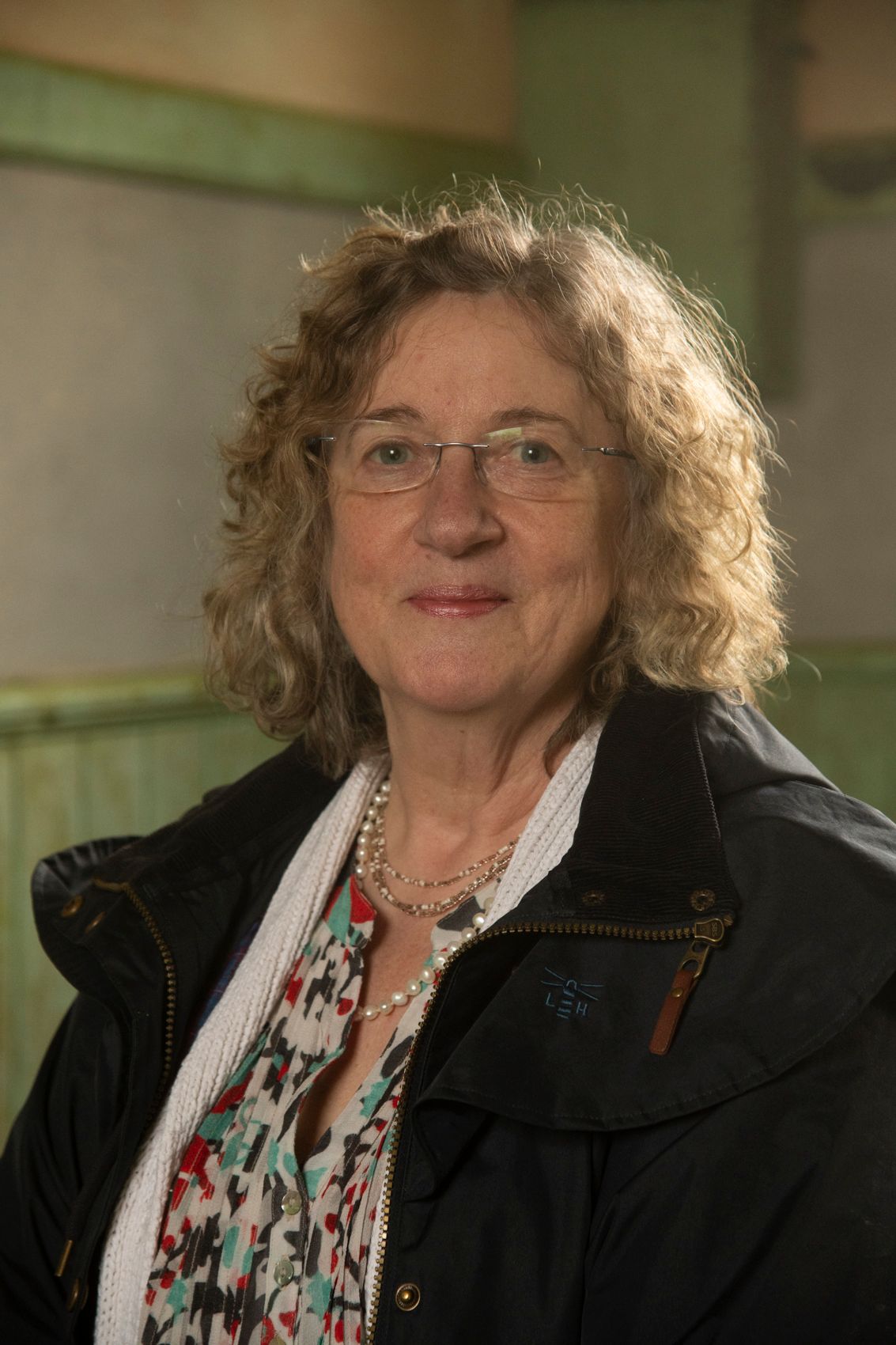
Margo Harkin is Ireland's one of the most versatile and respected film makers, having directed and produced fiction and documentary films for over 40 years. After graduating in fine art from the Ulster College of Art, Harkin worked as an art teacher and community worker before joining Field Day theater Company in 1980 as an assist stage manager and went on to work as a stage designer for the same company. In 1984, she co founded the C4 franchise Derry Film and Video Workshop, delivering critical perspectives which ran counter to the censored narratives then broadcast by British and Irish TV. Margo's directorial debut, Hush-a-Bye-Baby in 1990 was a drama about teenage pregnancy, following the 1983 abortion referendum in Ireland. Harkin established Besom Productions in 1992, soon forging a reputation as an astute local documentarian of injustices through a series of highly regarded television documentaries and cinema films. Her portfolio includes the Hunger Strike, Bloody Sunday: A Derry Diary, 12 days in July and Waveriders and finally Stolen. Her approach involved thoroughly researched, compelling accounts of her subjects.
Margo has held many board positions including Vice Chair of the former Northern Ireland Film Council and board member of the Irish Film Institute. Her work has won countless awards and is widely taught to third level film and media students. I am truly honored to host this incredible woman in We Can Find a Way.
So that's it for now. Please contact me if you want me to address a subject in the field that I have not yet covered here, or know a conflict resolution specialist who does something that may be of interest for conflict resolution practitioners all over the world. As always, I would like to conclude by saying that you please follow this podcast and its website, www.wecanfindaway.com. The website contains a transcription of the episode as well. Please like and share and repost the episode or excerpts that I share in the Instagram account of We Can Find a Way. I also share these excerpts in LinkedIn and BlueSky. We can find a Way is also in many podcast platforms including YouTube, Apple and Spotify.
As always, I like to close by thanking musician Imre Hadi and artist Zeren Gaktan who allowed me to use their music and photograph in the podcast. Thank you and hope to meet you in the next episode.
Documentary Director
Margo Harkin is Ireland's one of the most versatile and respected film makers, having directed and produced fiction and documentary films for over 40 years. After graduating in fine art from the Ulster College of Art, Harkin worked as an art teacher and community worker before joining Field Day theater Company in 1980 as an assist stage manager and went on to work as a stage designer for the same company. In 1984, she co founded the C4 franchise Derry Film and Video Workshop, delivering critical perspectives which ran counter to the censored narratives then broadcast by British and Irish TV. Margo's directorial debut, Hush-a-Bye-Baby in 1990 was a drama about teenage pregnancy, following the 1983 abortion referendum in Ireland. Harkin established Besom Productions in 1992, soon forging a reputation as an astute local documentarian of injustices through a series of highly regarded television documentaries and cinema films. Her portfolio includes the Hunger Strike, Bloody Sunday: A Derry Diary, 12 days in July and Waveriders and finally Stolen. Her approach involved thoroughly researched, compelling accounts of her subjects.
Margo has held many board positions including Vice Chair of the former Northern Ireland Film Council and board member of the Irish Film Institute. Her work has won countless awards and is widely taught to third level film and media students.
