
Restorative Justice Episodes
8
Sept. 27, 2025
After the Struggle – Lessons from Northern Ireland for Post-PKK Peacebuilding Guest: Tim Chapman
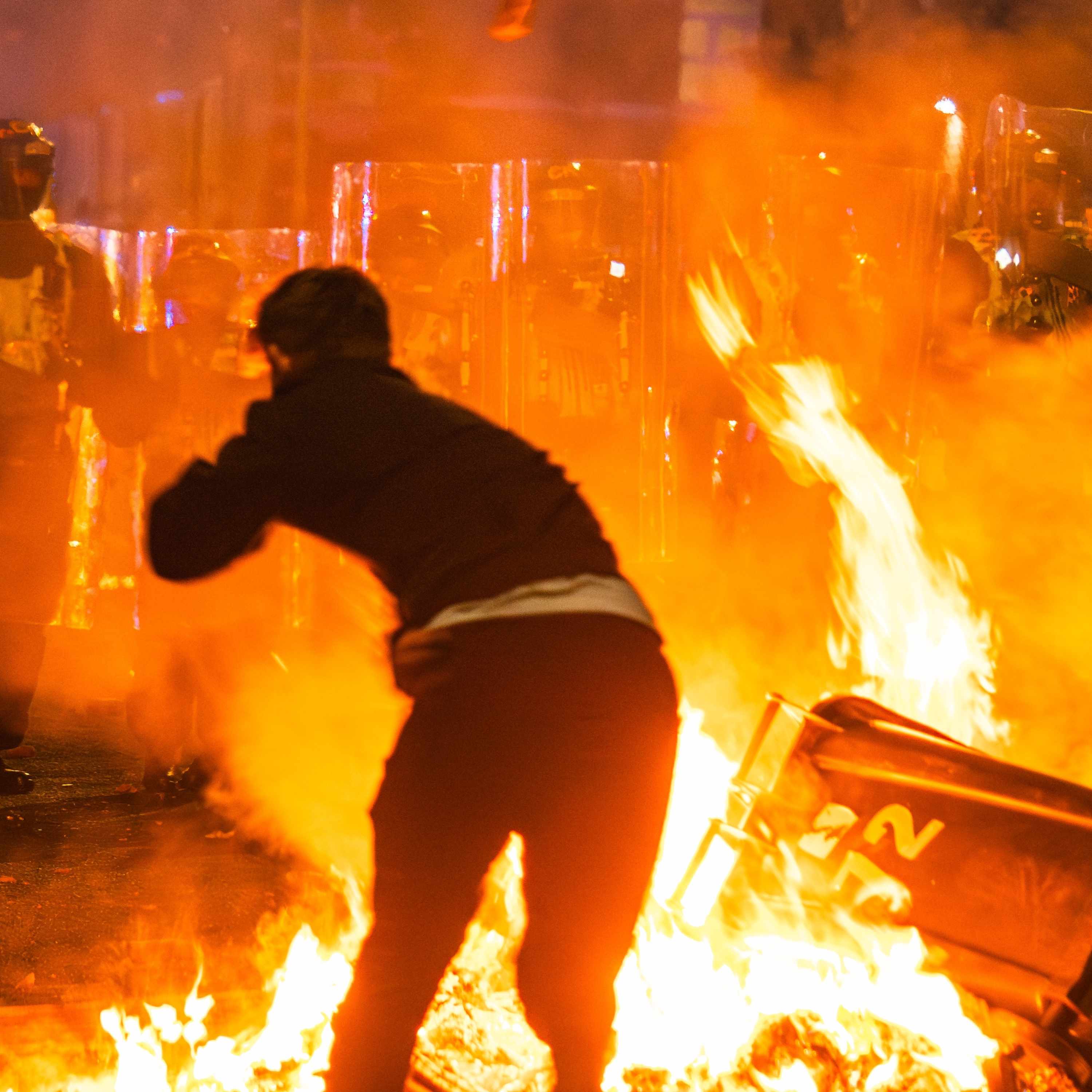
In this episode of We Can Find a Way, we reflect on a historic turning point: the dissolution of the Kurdistan Workers’ Party (PKK) in May 2025. The PKK’s decades-long armed struggle against Turkey claimed over 40,000 lives, leaving behind a scarred society now faced with the complex challenges of healing and rebuilding. To explore what a meaningful peace process might look like—especially when it comes to social cohesion, reintegration of former prisoners, and victims’ rights—I spoke with Ti...
Guest: Tim Chapman, UK

6
June 9, 2025
We were overwhelmed by calls Guest: Manal Hamdoun Ghandour
In this episode, I spoke with Manal Hamdoun Ghandour who works for a Lebanese NGO that deals with issues of the past, reconciliation and trauma sensitive peacebuilding. She explained the aftermath of the Lebanese civil war; the amnesty law; how the families of the disappeared people reacted to it and reconciliation efforts through AI, all of which can be relevant after the regime change in Syria.

5
May 12, 2025
Prevent the fire first Guests: D. Defruyt W. Huyzentruyt
Asylum centers are ripe for conflict. Residents share crowded spaces with those they do not know or speak the same language. Often traumatized and sometimes alone, they try to navigate the asylum process. It is also difficult for the employees to try to assist the residents when they do not understand the structure and the process, let alone ensure compliance. In this picture, an asylum center in Belgium started using restorative practices to decrease incidents, create more connection and increa...

4
April 24, 2025
We all suffered Guest: Georges Salines
In this episode of WeCanFindAWay, I spoke with Georges Salines from France who lost his daughter Lola in the Battaclan terror attack in Paris in 2015. He explained how he got involved with Retissons du Lien, an NGO in Belgium that brought together the families of victims and perpetrators (covered in the second episode of season seven); what reaction he got from friends and family by being in the same group with perpetrator families and what he learned about by being in there. He was shaken by...
Guest: Georges Salines, France

3
March 12, 2025
Kartalkaya'da yargı niye çözüm olamıyor? Konuk: Ulaş Karan
Bolu Kartalkaya’da yaşananlar ertesi mağdur aileleri hızla bir araya geldiler, acılarını paylaştılar. Aynı zamanda adalet arayışı için yargıya yönlendirildiler. Konuğum Ulaş Karan, mağdurların yargıya yönlendirilmesinin onları yıllar sürecek bir hukuk labirentinin içine sokacağı ve bu sürecin başlı başına insanlık dışı olduğunu ifade etti. Karan, bunun sadece Türkiye’de değil başka ülkelerde de konunun hukukileşmesine ve dolayısıyla mağdurların beklentilerini karşılamamasına neden olduğunu...
Guest: Ulas Karan, Türkiye

2
Feb. 12, 2025
What can we do about what happened to us? Guests: Roland Prevot, Olenka Czarnocki
In this episode, I am talking to two persons from Retissons du Lien (Weaving links), a group established in Belgium following the terror attacks in Brussels in 2016. The group brought together unlikely people. Those who were bereaved by or were survivors of the attacks came together with the families who were concerned about their children becoming involved in the Jihadist ideology. Add to this, front line workers in the field and long meetings, events and monitoring of the trials followed. M...

2
Feb. 21, 2024
Justice can be trauma informed Guest: Gael Cochrane
In this episode, I spoke with Gael Cochrane who w…
Guest: Gael Cochrane, Scotland UK

8
Sept. 24, 2023
Quick fixes don't work at schools Guest: Belinda Hopkins
In this episode, my guest was Belinda Hopkins who is the director of Transforming Conflict. We discussed how a restorative approach through circles can help students build relationships and values at schools. This would hence help with conflicts at school whether with fellow students or teachers but also among members of the administration. Belinda is a provider of training and consultancy in the field of restorative approaches in schools, residential care and other youth settings.
Guest: Belinda Hopkins, UK
7
Sept. 9, 2023
Reconciliation is not for the past Guest: Nergis Canefe
For over 100 years, the Canadian government in cooperation with the churches has taken away indigenous children from their families never to return them. They assimilated them, changed their religion and did much more. My guest Nergis Canefe explained how this was done and after all the pain and loss for the indigenous communities, there can be reconciliation between the aboriginals and Canadians of all sorts including those who arrived in the country recently. We discussed whether the adoption of the National Day of Truth and Reconciliation and similar measures can be examples and how society can play its part in healing.
Guest: Nergis Canefe, Canada
9
Oct. 15, 2022
Restorative walk: healing through interaction with abuser Guest: Gemma Varona
My guest Gemma Varona is an academic researcher a…
Guest: Gemma Varona Martinez, Spain
8
Sept. 11, 2022
Reconciliation must be part of the peace Guests: Robi Damelin, Layla Alsheikh
In this episode, my guests were two women from th…
4
April 30, 2022
"I wanted to humanize them" Guest: Jo Berry
My guest Jo Berry is Founder of ‘Building Bridges…
Guest: Jo Berry, UK
1
Jan. 28, 2022
"Restorative justice changed my memory" Guest: Ailbhe Griffith
My guest Ailbhe Griffith is an advocate for resto…
Guest: Ailbhe Griffith, Ireland
11
Dec. 30, 2021
Onarıcı adaletin faydaları Konuk: Galma Akdeniz
Devletin ceza yargılaması yapmasının toplumlarda …
Guest: Galma Akdeniz, Türkiye
10
Nov. 25, 2021
Ceza yargılaması toplumsal yüzleşme alanı değil Konuk: Onur Bakıner
Geçiş dönemi adaleti nedir; nasıl ortaya çıkmıştı…
Guest: Onur Bakıner, Türkiye