
Do leaders realize how broken employees could be? Guest: Judith Dawn


 Spotify
 Apple Podcasts
 Soundcloud
 YouTube
 Overcast
 How do you lead after the unthinkable? My guest, 9/11 survivor Judith Dawn Francis-Wertenbroch joined us to share her harrowing escape from the 102nd Floor of the World Trade Center. Co-hosted by David Faro of London Business School, this episode dives into:
- Coping with Trauma: Judith’s personal journey of resilience.
- Trauma-Informed Leadership: Why modern business leaders must understand the psychological impact of crisis.
- Professional Resilience: How extreme experiences reshape career roles and decision-making.
IE: Hello and welcome back to another episode of We Can Find a Way. My name is Idil Elveris. I'm your host. This is the eighth season of We Can Find a Way, a podcast about conflict and alternative dispute resolution means. Soon, We Can Find a way will hit 100 episodes. I'm grateful to my listeners who gave me the motivation to keep it going. I also would like to thank everyone who has helped me along the way to reach this important milestone because most podcasts do not even make it to 20 episodes.
In this episode I'm talking to Judith Dawn Francis Wertenbroch who has survived the 9/11 attacks in the US working at the World Trade Center, Judith managed to walk down the stairs from 102nd floor of Tower 2 that morning. She has spoken about her experience of dealing with trauma in different contexts and I'm glad that she also agreed to share this traumatic event with my listeners. I co hosted this episode with David Farrow from London Business School. He teaches crisis management there and discusses the 911 Commission Report as part of his course. We wanted to talk to Judith together because her experiences of relevance for business leaders in today's world. David and I asked Judith how she coped with trauma, why it is important for business leaders to be trauma informed, and how her trauma experience helped her in later professional roles. Let me now go to the interview that took place on 9th January 2026. As always, I will introduce my guest at the end of the episode.
I have here my guest, Judith dawn, and I'm hosting this episode with David Faro. Welcome, Judith. Welcome, David.
DF: Thank you. Idil.
IE: Let's get started. Judith, please tell us, what is trauma? Any examples you would like to tell us of trauma?
JD: For me, trauma is simply…. There's nothing simple about it, but it's the emotional, mental, physical response that a person may have regarding an event such as rape, a terror attack. I think the world has also just witnessed not just September 11, but looking at this woman being shot in Minneapolis, Minnesota. In America, look at what's going on in the Middle East. Those are all traumatic events which is overwhelmingly stressful and frightening and threatening, especially if you're in the immediate vicinity of these occurrences. So, really it's just the response that the body has. Emotional, mental, physical response that one is left with and a constant fear that we live with when traumatized. It is a deeply personal thing. You can have two individuals standing in the same space. I have colleagues who also was present on September 11, and those colleagues and I have completely different responses.
IE: I really like when you refer to a response that the body has because there is a book by that, you know, “the body keeps the toll”. What kind of things that the body keeps?
DF: It's a bit strange, but when I'm walking into a threatening environment or approaching someone, perhaps from whom I've had some interaction, my body responds a certain way. My heart races. I become hypervigilant. I find myself needing to feel safe. One of the things I did post September 11th, if I had nightmares at night, I often woke up and stuck my hands under rushing cold water or just turning on the shower. So, when I find the need to do things that are calming my breathing, for example, taking a walk, a brisk walk, or just touching my skin to calm myself down. I know that I'm in an environment or a space where my body feels threatened, my whole being changes. And I think if we tap into ourselves, if we know ourselves well, we can pretty much tell when we are in a space that evokes such feelings of fear or threat or extreme stress and things like that.
IE: Animals, our pets, know it before we do. Whenever we have these, like, breathing issue or, you know, need for cold water, we have this fear and threats perception. They really know. And, they come onto your lap, they let them pet themselves to calm you down. Because we're not really cognizant always of our trauma or what happens in our bodies. How could you tell that, that this was a trauma response?
DF: I knew myself fairly well, and I had spent the last two years before September 11th really learning about me, listening to, perhaps even many years before I was in the US Navy. I actually went into the Navy because I wanted to learn about me separate from my family members. And I had one patient in particular for our day of.. tiny, tiny little woman who, whenever she had a procedure, and this was a patient on a cancer ward, OBGYN, oncology patients. Death was in the picture always. But whenever she asked for me, it brought encouragement, strangely enough, because it revealed something that she saw in me that perhaps I had not seen in myself. There was a kindness she needed. And while she was going through perhaps the worst experience of her life, she was calling on this young woman to come and sit at her bedside, to just hold her hands.
Post 9/11, I reflected on many of those occurrences to take me through the healing and to look at things that I had developed over a period of time that calmed me, that said that this is a healthy response to what you're going through. And when I knew that I was in a deeply hypervigilant state or a state that would hurt my nephew and nieces, I often extracted myself. They had never seen me like this. They were the most important people in my life at the time. I saw myself doing things that if others were looking at me, they'd see a Judy that perhaps they'd never known.
I worked out at the gym every day or six days a week, two to three hours each time, because it was about creating balance in my body where the adrenaline was just spiking. I had to release it. Going to the beach in the dead of winter just to listen to the rush, the ocean..
IE: Calming.
JD: Calming. I refused to take medication. I had acupuncture instead. I often found myself in situations where I was comforting others. Not that that wasn't me, but something I did fairly often was: I'd go to the World Trade center site and just stand and listen to the sounds. People speaking about the horror of the event and remarking to themselves that they cannot imagine that anyone survived this. And to be there as, someone to comfort them, to say: “I survived, not everyone died”. But to take it further than just the event, because what I found in speaking at churches, synagogues, wherever temples, is that people often associated, dismissed their trauma.
IE: Yeah.
DF: Would make comments like “oh, I can't imagine surviving something like that. My trauma is nothing, or what I've gone through is nothing compared to what you went through”. And I would refer to women's battered syndrome: people, not just women, people who are being raped. Young boys and young girls. You know, take it to… what we are witnessing on television right now. The woman in her car in Minneapolis, Minnesota, who was just shot, she's being called a “domestic terrorist”. This woman had just, according to the news, dropped her child off, at a daycare facility. You know nothing about her, but you're calling her a domestic terrorist.
George Floyd, Breanna Taylor, so many innocent people in this world who have been hurt severely. Look at what her children were or the people in the community who witnessed this. They've been traumatized as well. You've got collective trauma in that regard. You've got community resilience. And I mean, some of those are the things that come to mind. When I think of how do we rebuild? When a community comes together, we build each other up and we strengthen one another. After September 11th, almost immediately I found a therapist. She is a former professor of mine at school. A colleague had sent out a message to her and she said: “Whenever Judith is ready, tell her to come”. So I think it was October 5, 2001. I walked into her home office and when I saw her face, immediate, because the first thing a person needs when they're traumatized is that sense of safety. If you don't have that sense of safety, as you're going through healing, you will lose your footing in the whole process. So, having people around you who speak to that sense of safety, like I am sensing right now in your presence, and this is my anxiety that I'm feeling right now, this is, that's very important.
DF: Thank you. And thank you for speaking to us. You started from a very personal place and you talked about how each person might experience trauma differently. You talked about how spaces can bring people together, like when you went to the 9/11 location. What I wanted to ask you more about is the interaction between the personal way of experiencing the trauma and the more communal and why even people who might not have been there might have been traumatized. And how their reactions can be understood, can also maybe helpful in emerging from trauma and crises.
DF: When we look at any event, we can't just think it's about me. I don't think I gave it much thought that it was necessary to go out there and be an agent of healing or building community or encouraging or anything like that. It was simply that I think I wanted to just understand more deeply what was going on with other individuals and their perspective on what had taken place. Because even the morning when my colleague and I were running up on Broadway and we eventually got into an NYU school bus, there were people coming on the bus saying “oh, I can't imagine anyone surviving this”. And we sat there and I simply communicated to those who came on, “we were there”. To the people who made comments, “we were there, we just survived”. And it was almost an out of body experience in that time, in that moment.
IE: Because you're still in a flight mode?
JD: Right. I was in flight in the most amazing way, until I got to a place of safety, her husband's office on 73rd Street..
IE: Far.
JD: Second Avenue. About 11:30 that morning, that's when I started crying and got in touch with my mother and my nephew and nieces and brother. And then later that day when my brother picked me up, my dam broke and everything just came spilling out. If we think of healing in isolation, we won't heal. Something I did, which later I reflected on the things I did. I often called different people with whom I felt safe and said: if I'm going through this, this is what you need to do. If you're speaking to me and my thoughts are racing, my words are racing, or you can tell that I'm shifting into a heightened state of anxiety or feeling like I'm being threatened: these are the things you need to do. One thing in particular was inject humor. Not just something calming, but inject humor. Take me to a place of laughter. Take me back to my childhood. Take me to your childhood. Take me to a place where there was great laughter. Yo know…
IE: This is incredible self awareness on your part Judith because you have figured out what works for you. And not only you're doing it yourself, but you're also helping others help you through sharing what works for you. Going back to the place that traumatized you, it's again very, very important because you could have completely avoided it, but you probably wanted to go back there and-or see what you feel. But then you ended up talking to others, helping them. So you can really see the progressive development of your own dealing with your trauma.
DF: I was struck by the comment that Judith made about humor. There is some literature and research about the use of humor to deal with difficult situations. Both like people using like dark humor, but also companies using humor in times of crises. It's kind of like a risky strategy sometimes because humor is notoriously difficult to communicate, especially in print or you know, when you're not there in the person. And so it's not a very safe strategy, but it can be a very effective one, sometimes if you're lucky to move it slightly to a little bit less serious situations. But when a company goes through a crisis, for example, other companies might use humor to take advantage of the situation a little bit. And also the company itself that is going through the crisis can be self deprecating a little bit, using humor in a way to maybe cope with the difficult situation.
I also wanted to follow up a little bit on the fact that because trauma can be experienced not just by, you know, by the person or together with many other people, there are people in positions of power or leadership positions that can help with the coping or with communicating in a way that would be helpful for you, like to the people that you said that you expect something from them and you told them what you expect from them. So I wonder whether you have any thoughts about what would be your expectations of leaders when they communicate to people who have been traumatized, who are going through trauma.
IE: The cat is not strangling him. Don't worry, Judith. He is just….
JD: Very healing… Looking at this is, my mother gave me a Maltese A couple of years after she gave me a Maltese. And it was very important for me because she was able to tell when I was anxious and she'd come and do…. Speaking of, leadership, when I moved to California, a family somewhat adopted me. The wife was Jewish. The husband, he said he was agnostic, but he often gave me the time. And I would make lasagna for them and get a bottle of wine and glasses and whatnot and take it to work and say: “okay, so this is what you need to do when you go home”. It was about doing things that I think reflected the compassion and kindness from the leadership around me. The husband, he wasn't the boss, he was senior to me. And the whole environment that I was in, they all knew what I had gone through, not because I shared it with them, but the person who introduced me to them had spoken to them about what my background was. And the wife eventually hired me at Kaiser Permanente. And then I eventually went to West Coast University where I was dean of students, administration and whatnot. And the whole environment, the faculty, the students, the staff, they were all exhibiting behaviors that said to me, “this is a leadership group that are aware of what is needed when you've got traumatized people in your midst”. And it wasn't that it was centered around me. It was centered around the care and concern we need to give to students and faculty. Because when you have students in such an intensive program, they often deal with their own traumatizing situation. Many of them were foreigners who came to America to get themselves out of the situation that they grew up in, whether in the Philippines or the Middle East or something. We had Armenian students, Turkish students, Vietnamese from wherever in the world that had left… I remember having a student who often slept in her car and she'd come in to me in the morning, just share what she had just gone through. That is traumatizing. So having brought my own experience to her, sharing hers with me, I think it just allowed me to help many of them in ways that I never thought something so ugly can bring about such beauty. Because the relationships that were built with faculty, students and staff were mind boggling.
DF: So they were fortunate to have you in the leadership team over there. But you had this experience, you know, not many people had.
Do you think people can train themselves in being trauma aware, in being able to communicate well with traumatized people? Are there any resources you might suggest?
JD: I do believe people can train themselves or put themselves in environments where they can be trained, whether they're volunteering in settings. Something that I had done a good bit of before September 11th, but I can't immediately think of resources. But I'm sure there are organizations that provide training to anyone who is willing to take this road. You know, even after I moved to California, the biggest part of my environment was church. Attending the Seders as well of the messianic Jews in, in the community that I was part of. It was perhaps the most supportive environment of a group of people that I had ever been in, even more so than being in the military. This was healing 101 through 110. You know, in every regard. Friendships I have today are still what came out of that initial building. Eighteen months after September 11, I moved to California. I didn't have a job, didn't drive, I didn't know anyone. It was a blank slate. And my idea was to run away, not let anyone know anything about me and start over. My plan was to go to Northern California and I ended up going to the south after a few clear indicators. And then one woman, a friend of my mother, said: “I know what your plan is. I just want to let you know that my home is available to you if you change your mind”. And so I did change my mind and I stayed with her for four months, got my license, got a job, and then I moved out and started building.
IE: I guess your also alluding a little bit on peer support along with moving away from a place that where the traumatizing event has occurred.
Can you tell us why it's important for leaders to understand trauma, applying for jobs, having trauma. And you also said when you were in an environment like the university where you found later employment, where people were more understanding of this type of care, it really worked. But please walk us through. Why is it relevant for not only just leaders, but business leaders today if they can learn how to work and communicate with people with trauma?
JD: I don't want to say that those in leadership positions are not aware of trauma. I think many of them are, but they don't perhaps realize how broken, how hurt, how injured many employees and even people their direct reports could be. They themselves may be injured and they have suppressed and allowed whatever injury to lay dormant for so long. They don't see how behaviors are showing up that are a result of being traumatized at some point in their life. And so I think that awareness allows a leader to be more compassionate, to show more kindness, that when they are seeing certain behaviors in an individual, that awareness can allow them to have a different conversation with an employee. Instead of simply saying, “you're fired” or “you will be written up” or whatever the punishment is… I think we focus too quickly on punishing rather than addressing what may be the root cause of someone's behavior or someone feeling stuck. When a person is traumatized, they will often feel stuck, and he or she may not even be aware of what is taking place in that moment. So an organization where the leadership to the person in the mail room or wherever, if they can go through that awareness training, that something that says, I want to approach my company in a different way, will do well with, I think, pretty much everybody on board. I remember sitting in on my interview at West Coast and thinking, as I did when I my first Sunday at church and thinking, “I have come home”, that this is the kind of home I want. When you project that those who work for you, they will bring loyalty and commitment at a level that you have never seen, in a way that says, call on me at any time and I will give you my all versus the person who wants to run the moment they get to the office. Or who wake up with anxiety every morning because they have to go to an environment that is punitive, that is…
IE: Or toxic, even.
JD: Toxic in the worst way. And there are too many of those out there.
IE: Yeah. Where you feel mobbed, harassed even. And I guess people don't realize that trauma is like enhancing conflict or triggering more conflict. They just want to run business. And business is like, free from all those distractions and it should be run like a machine. But they forget the human element, I guess.
JD: Human element, yeah. And you know the expression, you catch more flies with honey. And that is very true. Because when you are, gentle and kind, I think of.. my scripture is very important to me. And Galatians 5:22 talks about the fruit of the spirits. When you think of love, joy, peace, patience, kindness, gentleness, goodness, faithfulness and self control, when you dish that out, you get so much more back. And I remember in the beginning I had done a, Dateline interview and one of the two women who had put my name forth to the producers at Dateline. One evening we went out. They were completely different in many regards. Similar, but very different. And one of them offered me cocaine. She was angry with me because I later realized she did not like the person she was now seeing. Somebody who was broken, somebody who did not laugh easily. So she just wanted to kill everything about me that she did not recognize. And I looked at her and basically just walked away. If she had had a different approach, we would be friends today. But I left New York and left that friend behind. When we are traumatized, if we have a sense of who we are, we can walk away from situations like that. But if we want to kill the pain, and I walk through my pain with my therapist in the beginning, and we can very easily go and say, give me the cocaine, give me whatever.
IE: Let me numb myself.
JD: Yeah. Which is why it's so important for leaders to show compassion and kindness and gentleness because their behavior, their reactions could, not to absolve anyone of the responsibility of whatever actions they take…. but these things are too easily available to any of us as a way of escaping the pain and the rejection that we feel every day. And if we are not careful, sometimes we are the ones that could be driving people to the drugs and abuse. And again, as I said, it's not to absolve anyone of the responsibility for doing such things, but it happens.
IE: So how did your experience of 9/11 helped you in your professional roles?
JD: I would say it made me even more understanding. I found myself in meetings where I was often defending somebody who is seen as belligerent or blistering or something. For me, it was, okay, let's step back and look at the whole person. Because somebody could be reacting because of the space that they're in. Somebody may have been abused. Somebody in our meeting is triggering this person or that person.
So I would say that my experience of September 11th, my experience of, my spinal replacement surgery a few years later, all of this, I think, helped me to listen more, to be gentler, to be kinder, to be more compassionate, to see with different eyes, you know, many of the situations I walked into. I remember laying in bed preparing for the surgery, and the surgeon came in and he told me what he was going to do. After he left, I spent hours reflecting on what I had learned out of being with my patients and after September 11th, and that I was ready for this. I told my therapist after September 11th that God had prepared me for that morning or I would not have been able to run down the stairs, touching people on the backs and just laying my hands on their shoulders and saying “do your best”. That's all you can do in this moment. And trying to feel a connection to each person I passed as I ran down the stairs. Any student or faculty or staff who walked into my office in my…. at West Coast and even at Kaiser, I considered it a privilege to be able to offer myself, to help them, to get to the next point of whatever struggle or whatever they were going through. I think my traumas have helped me to be more thoughtful and compassionate.
IE: And how do you think your employers appreciated that? I guess you opened, a new door for them.
JD: I remember Dr. Robin Nelson, emails that I received from her. She was the big chief dean of, all of the programs of all of the campuses. When she learned that I was leaving to move to France, she expressed some of her sadness. But what she had heard from students and other faculty members, some of whom I'm still in touch with today, that said that there was an impact on the leadership.
IE: Future managers, how can they be trauma informed?
JD: I think just going in with an open heart instead of thinking that I've got all the answers already in what is necessary to run this program or run this school or run this organization. If they simply approach with the understanding that there's so much I can learn here from anyone in this room. We travel to New York, for example. The homeless man on the street can teach us something.
DF: Judith, if I can just add, I think what I learned today is that we talked about this very different and, momentous, like huge kind of event. 9/11. But through the conversation, you talked about so many other things, so many other contexts, like interacting with students that might have issues with school, with being adolescent, growing up, health issues like the surgery you had, which many people have different kind of health experiences. We deal with things these days that are kind of linked to politics, but also natural disasters, environments. So, I think what I learned from you today is how diverse are the situations which can trigger trauma or reflect trauma. It ceases from being this extreme, kind of rare situation that you need to deal with with a therapist over years. Instead, it becomes something that, that more people should be aware of. Leaders, teachers, friends, family. And so I think that was very helpful for me also as an educator. Thank you.
IE: Yes, thank you. Judith. You also alluded a lot on inequities creating mental health problems which then get, you know, exacerbated in any social environment, whether school, business, work or family or any other. Anyways, thank you very much.
Is there anything you would like to add?
JD: Not really, but perhaps a little when we think of people who've been traumatized, not just to think of these big events. I remember speaking at different engagements and people, women in particular or men actually, would come up and say: “oh, my situation is not as big as yours. I was just abused as a wife or husband or a child”. Abuse can leave us traumatized any form of abuse, verbal, physical or otherwise. Our bodies still react to that. And when I say it is deeply personal, we each deal with it in a different way. So really not to minimize what you've gone through because it has changed you in some way. Facing it instead of avoiding it builds. It doesn't take away from you. Confronting it allows you to be braver, to be stronger, to be more courageous. If you hide and cower, you're going to lose yourself in that.
IE: We can end on that. Amazing. Thank you very much.
JD: Thank you.
DF: Thank you, Judith.
IE: Judith Dawn Frances Wertenbroch, a psychologist by training, has worked as an education executive in California and Singapore before moving back to France in September 2023. Originally from St. Vincent and the Grenadines in the Caribbean, Judith arrived in the US as a teenager, where she finished high school and then joined the US Navy. After finishing her tour of duty in the Navy, Judith went on to earn a Master's degree in Applied Psychology, NYU, in New York City. She was working at the World Trade Center for a risk management consulting firm on the 102nd floor in Tower 2.
In the aftermath of the 9/11 attacks, Judith struggled with the signs and symptoms of severe trauma, which includes but are not limited to, panic and anxiety attacks, exhaustion, sadness, agitation and numbness, to name a few.
So, that's it for now. Please contact me if you want me to address a subject in the field that I have not yet covered here, or know a conflict resolution specialist who does something that may be of interest for the audience here. For conflict resolution practitioners all over the world, please follow this podcast and its website, www.wecanfindaway.com. The website contains a transcription of the episodes as well. Like and share and repost the episode or excerpts that I share in the Instagram account of We Can Find a Way. I also share these excerpts in LinkedIn and BlueSky. We can find a Way is also available in many podcast platforms including YouTube, Apple and Spotify. Comment and Review and finally, as to thanks, I like to close by thanking musician Imre Hadi and artist Zeren Goktan, who allowed me to use their music and photograph in the podcast. I would like to specially thank my sponsor, Dr. Paolo Michele M. Patocchi, Attorney at Law and Arbitrator, for supporting We Can Find a Way. Thank you and until next time.
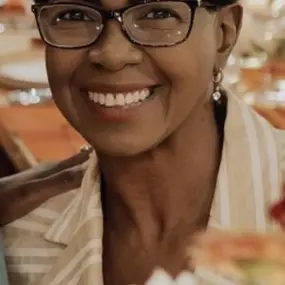
Psychologist
Judith is a psychologist by training. She has worked as an education executive in California and Singapore before moving back to France in September 2023. Originally from St. Vincent and the Grenadines in the Caribbean, Judith arrived in the US as a teenager, where she finished high school and then joined the US Navy. After finishing her tour of duty in the Navy, Judith went on to earn a Master's degree in Applied Psychology, NYU, in New York City.
She was working at the World Trade Center for a risk management consulting firm on the 102nd floor in Tower 2. In the aftermath of the 9/11 attacks, Judith struggled with the signs and symptoms of severe trauma, which includes but are not limited to, panic and anxiety attacks, exhaustion, sadness, agitation and numbness, to name a few.


